Pennsylvania Department of Health
RIVERSIDE HEALTH & REHAB CENTER
Patient Care Inspection Results

Note: If you need to change the font size, click the "View" menu at the top of the page, place the mouse over the "Text Size" menu item, and select the desired font size.

Severity Designations

Click here for definitions Click here for definitions Click here for definitions Click here for definitions
Minimal Citation - No Harm Minimal Harm Actual Harm Serious Harm
RIVERSIDE HEALTH & REHAB CENTER
Inspection Results For:

There are  179 surveys for this facility. Please select a date to view the survey results.

Surveys don't appear on this website until at least 41 days have elapsed since the exit date of the survey.
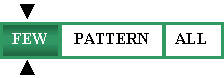
RIVERSIDE HEALTH & REHAB CENTER - Inspection Results Scope of Citation
Number of Residents Affected
By Deficient Practice
Initial comments:Based on an Abbreviated Survey in response to three complaints, completed on August 20, 2026, it was determined that Riverside Health and Rehabiliation Center was not in compliance with the following requirements of 42 CFR Part 483, Subpart B, Requirements for Long Term Care Facilities and the 28 Pa. Code, Commonwealth of Pennsylvania Long Term Care Licensure Regulations.
 Plan of Correction:


483.60 REQUIREMENT Provided Diet Meets Needs of Each Resident:This is a less serious (but not lowest level) deficiency and affects more than a limited number of residents, staff, or occurrences. This deficiency is one that results in minimal discomfort to the resident or has the potential (not yet realized) to negatively affect the resident's ability to achieve his/her highest functional status. This deficiency was not found to be throughout this facility.
§483.60 Food and nutrition services.
The facility must provide each resident with a nourishing, palatable, well-balanced diet that meets his or her daily nutritional and special dietary needs, taking into consideration the preferences of each resident.
Observations: Based on a review of facility documents and resident and staff interviews it was determined the facility failed to meet the dietary needs for one of 17 residents (Resident R2). Findings include: Review of Resident R2's record indicated the resident was admitted to the facility on 7/24/26. Review of the Minimum Data Set (MDS, periodic assessment of resident care needs) dated 7/30/26, included diagnoses of heart failure (a progressive heart disease that affects pumping action of the heart muscles), malnutrition (lack of sufficient nutrients in the body), and a history of cancer. Review of a grievance submitted by Resident R2 on 7/27/26, indicated, "[Resident R2] stated that she did not get a dinner tray on 7/26/26. [Resident R1] stated other resident did not get a dinner tray as well She was told there were dietary issues." During an interview on 8/20/26, at approximately 12:30 p.m. Resident R2 confirmed that she did not receive a dinner tray on 7/26/26, and stated she was told by staff that a total of four residents did not get their trays. When asked if she was provided a meal later in the evening, Resident R2 stated, "I called Luciano's and ordered a pizza." Resident R2 stated that staff apologized, but still didn't bring any food up. Resident R2 stated that she had been informed that staff in the kitchen were arguing that day. During an interview on 8/20/26, at approximately 1:00 p.m. Dietary Manager Employee E5 was able to recall the incident, and confirmed that it occurred on a Sunday after he had left the building. Dietary Manager Employee E5 stated that there had been "issues with the PM cook." Dietary Manager Employee E5 stated that he returned to the facility after being informed, arriving at approximately 9:00 p.m. and met with the resident and apologized. Dietary Manager Employee E5 confirmed that Resident R2 had ordered a pizza for her evening meal. During an interview on 8/20/26, at approximately 3:00 p.m. the Nursing Home Administrator confirmed the facility failed to meet the dietary needs for one of 17 residents. 28 Pa. Code: 201.18(b)(1) Management 28 Pa. Code: 211.12(d)(3) Nursing services 28 Pa Code: 211.6(a) Dietary Services
 Plan of Correction - To be completed: 09/11/2026

1.Food Service Director met with Resident R2 on date of incident at approximately 2100. R2 was offered a new dinner tray which was refused by resident. Food Service Director verified that no other residents had not been offered a meal.
2.An initial audit was conducted that every resident has a ticket in meal tracker.
3.Food Service Director/Designee will educate dietary staff on timely meal service. DON/Designee will educate CNAs on timely meal service.
4.NHA/Designee will audit meal trackers 3x a week for two weeks and then 1x a week for two weeks to ensure that all residents are receiving a tray. DON/Designee will audit 10 random residents to ensure that a meal was provided 5x a week for two weeks, and then 3x a week for two weeks.
5.Results to be submitted to QAPI for review.

483.25(d)(1)(2) REQUIREMENT Free of Accident Hazards/Supervision/Devices:This is a less serious (but not lowest level) deficiency and is isolated to the fewest number of residents, staff, or occurrences. This deficiency is one that results in minimal discomfort to the resident or has the potential (not yet realized) to negatively affect the resident's ability to achieve his/her highest functional status.
§483.25(d) Accidents.
The facility must ensure that -
§483.25(d)(1) The resident environment remains as free of accident hazards as is possible; and

§483.25(d)(2)Each resident receives adequate supervision and assistance devices to prevent accidents.
Observations: Based on facility policy review, clinical and facility record review, facility submitted documents, and staff interviews, it was determined that the facility failed to provide adequate supervision to prevent elopement for one of four residents (Resident R1). This was identified as past non-compliance. Findings include: Review of the facility policy "Elopement/Unauthorized Absence Policy" dated 8/12/26, previously reviewed 7/2/25, indicated the facility will identify residents with potentiation and/or actual risk factors for elopement and protect the resident through development and implementation of safety interventions. Review of the clinical record revealed Resident R1 was originally admitted to the facility on 6/5/26. Review of the Minimum Data Set (MDS - periodic assessment of resident care needs) dated 6/11/26, included diagnoses of heart failure (a progressive heart disease that affects pumping action of the heart muscles) and dementia (a group of symptoms that affects memory, thinking and interferes with daily life). Review of an "Elopement Observation" assessment completed on 6/15/26, indicated Resident R1 was at potential risk for elopement, and a Wanderguard (electronic monitoring bracelet) was placed. Review of Resident R1's plan of care initiated 6/15/26, indicated that Resident R1 is an elopement risk. Review of a progress note written by Registered Nurse (RN) Employee E1 dated 8/11/26, at 12:45 a.m. indicated, "At approximately 12am staff notified this writer that resident was not in bed or his usuals locations. This nurse immediately initiated a sweep of the building. Notified DON (Director of Nursing) on duty that resident's location was unknown and a sweep was in progress. After completing a search of the building and the grounds outside upon entering the building resident was observed sitting outside of the administrative offices in the hallway inside the building. Resident stated he was looking for the people under his bed. Resident assessed for injuries. No injuries found. Resident assisted back to his room where a more thorough assessment was completed. Wanderguard on L (left) ankle functioning. Elopement system tested and functioning. DON notified that resident was observed sitting in the hallway inside the building." Review of a witness statement written by Registered Nurse (RN) Employee E2 stated, "During my initial rounds at approximately 2350 (11:50 p.m.), this nurse entered the resident room and observed that the resident was not in his bed. I did not see or have direct contact with this resident prior to discovering that he was not in his room. This nurse, with other staff members, began searching for the resident. This nurse searched the facility, drove around the facility and [adjacent facility]. Review of a witness statement written by Licensed Practical Nurse Employee E3 stated, "Supervisor made staff aware a resident was missing. Directed all staff to search all areas, all rooms, all bathrooms. Some were searching outside. The MIU (memory impaired unit) and 800-Hall searched and resident not there." Review of a witness statement written by Nurse Aide Employee E4 stated, "As I was walking down the 200-Hall I heard and seen the 'missing resident' come out the back where admin (administration) offices are located. Resident was not in his wheelchair but an office chair. Other than that he seemed okay." On 8/12/26, the facility initiated a plan of correction that included: -A full nursing assessment was completed on Resident R1 to ensure no injury occurred. -The DON (Director of Nursing)/Designee updated elopement assessments on all residents. -A resident headcount was conducted, and all residents were accounted for. -Resident plans of care were updated as appropriate. -Elopement drills completed on all three shifts on 8/11/26, and 8/12/26. -The DON/Designee educated all staff on the elopement policy and actions to take if an elopement occurs. -Locking mechanism on administration door adjusted and repaired to latch without the need to manually pull the door closed. -Signage placed on the locking door to the administration area reminding staff to ensure the door lock engages. -All facility doors were audited to ensure they were secure. The facility demonstrated compliance on 8/12/26. Review of Resident R1's clinical record on 8/20/26, revealed the elopement assessment and care plan were updated to include information on his elopement, risk for further elopement, and interventions. During five interviews on 8/20/26, staff confirmed they received education on elopement prevention and procedures if an elopement occurs. During an interview on 8/20/26, at approximately 3:00 p.m. the Nursing Home Administrator confirmed that the facility failed to provide adequate supervision to prevent elopement for one of four residents. This was identified as past non-compliance. 28 Pa. Code 201.14(a) Responsibility of licensee. 28 Pa. Code 201.18(b)(e)(1) Management. 28 Pa. Code 201.29(a) Resident rights. 28 Pa. Code 211.10(c)(d) Resident care policies. 28 Pa Code 211.12(d)(1)(2)(5) Nursing services.
 Plan of Correction - To be completed: 09/04/2026

Past noncompliance: no plan of correction required.
51.3 (g)(1-14) LICENSURE NOTIFICATION:State only Deficiency.
51.3 Notification

(g) For purposes of subsections (e)
and (f), events which seriously
compromise quality assurance and
patient safety include, but not
limited to the following:
(1) Deaths due to injuries, suicide
or unusual circumstances.
(2) Deaths due to malnutrition,
dehydration or sepsis.
(3) Deaths or serious injuries due
to a medication error.
(4) Elopements.
(5) Transfers to a hospital as a
result of injuries or accidents.
(6) Complaints of patient abuse,
whether or not confirmed by the
facility.
(7) Rape.
(8) Surgery performed on the wrong
patient or on the wrong body part.
(9) Hemolytic transfusion reaction.
(10) Infant abduction or infant
discharged to the wrong family.
(11) Significant disruption of
services due to disaster such as fire,
storm, flood or other occurrence.
(12) Notification of termination of
any services vital to continued safe
operation of the facility or the
health and safety of its patients and
personnel, including, but not limited
to, the anticipated or actual
termination of electric, gas, steam
heat, water, sewer and local exchange
of telephone service.
(13) Unlicensed practice of a
regulated profession.
(14) Receipt of a strike notice.

Observations: Based on review of clinical record and facility documents, it was determined that the facility failed to notify the State Agency of a reportable event within 24 hours for one of one resident (Residents R1). Findings include: Review of the clinical record revealed Resident R1 was originally admitted to the facility on 6/5/26. Review of the Minimum Data Set (MDS - periodic assessment of resident care needs) dated 6/11/26, included diagnoses of heart failure (a progressive heart disease that affects pumping action of the heart muscles) and dementia (a group of symptoms that affects memory, thinking and interferes with daily life). Review of an "Elopement Observation" assessment completed on 6/15/26, indicated Resident R1 was at potential risk for elopement, and a Wanderguard (electronic monitoring bracelet) was placed. Review of Resident R1's plan of care initiated 6/15/26, indicated that Resident R1 is an elopement risk. Review of a progress note written by Registered Nurse (RN) Employee E1 dated 8/11/26, at 12:45 a.m. indicated, "At approximately 12am staff notified this writer that resident was not in bed or his usuals locations. This nurse immediately initiated a sweep of the building. Notified DON (Director of Nursing) on duty that resident's location was unknown and a sweep was in progress. After completing a search of the building and the grounds outside upon entering the building resident was observed sitting outside of the administrative offices in the hallway inside the building. Resident stated he was looking for the people under his bed. Resident assessed for injuries. No injuries found. Resident assisted back to his room where a more thorough assessment was completed. Wanderguard on L (left) ankle functioning. Elopement system tested and functioning. DON notified that resident was observed sitting in the hallway inside the building." During an interview on 8/20/26, at approximately 3:00 p.m. the Nursing Home Administrator was made aware of the facility's failure to notify the appropriate State Survey Agency as required.
 Plan of Correction - To be completed: 09/11/2026

1.The Director of Nursing reported the incident to the Department of Health on 9/3/2026.
2.Incidents have been reviewed over the past 30 days by the Nursing Home Administrator/designee to ensure that any incidents that needed to be reported to the Department of Health were reported.
3.The Nursing Home Administrator and Director of Nursing will be re-educated on the policy for state reportable incident/events/allegations by the Regional Director of Clinical Services/designee.
4.The Regional Director of Clinical Services/designee will review incidents weekly for 4 weeks and monthly for 3 months to ensure any incident is reported to the Department of Health if applicable. Outcomes of the audits will be presented to the Quality Assurance Performance Improvement Committee for review and recommendations.


Back to County Map


Home : Press Releases : Administration
Health Planning and Assessment : Office of the Secretary
Health Promotion and Disease Prevention : Quality Assurance


Copyright © 2001 Commonwealth of Pennsylvania. All Rights Reserved.
Commonwealth of PA Privacy Statement

Visit the PA Power Port