Pennsylvania Department of Health
GREENWOOD CENTER FOR REHABILITATION AND NURSING
Building Inspection Results

Note: If you need to change the font size, click the "View" menu at the top of the page, place the mouse over the "Text Size" menu item, and select the desired font size.

Severity Designations

Click here for definitions Click here for definitions Click here for definitions Click here for definitions
Minimal Citation - No Harm Minimal Harm Actual Harm Serious Harm
GREENWOOD CENTER FOR REHABILITATION AND NURSING
Inspection Results For:

There are  49 surveys for this facility. Please select a date to view the survey results.

Surveys don't appear on this website until at least 41 days have elapsed since the exit date of the survey.
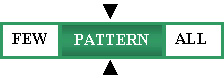
GREENWOOD CENTER FOR REHABILITATION AND NURSING - Inspection Results Scope of Citation
Number of Residents Affected
By Deficient Practice
Initial comments:Name: - Component: -- - Tag: 0000
Based on an Emergency Preparedness Survey completed on January 29. 2026, at Greenwood Center for Rehabilitation and Nursing, it was determined there were no deficiencies identified with the requirements of 42 CFR 483.73.
 Plan of Correction:


Initial comments:Name: MAIN BUILDING - Component: 01 - Tag: 0000
Facility ID #151202Component 01Main Building Based on a Medicare/Medicaid Recertification Survey completed on January 29, 2026, it was determined that Greenwood Center for Rehabilitation and Nursing was not in compliance with the following requirements of the Life Safety Code for an existing health care occupancy.  Compliance with the National Fire Protection Association's Life Safety Code is required by 42 CFR 483.90(a). This is a one-story, Type II (000), unprotected noncombustible structure, which is fully sprinklered.
 Plan of Correction:


NFPA 101 STANDARD Hazardous Areas - Enclosure:This is a less serious (but not lowest level) deficiency and affects more than a limited number of residents, staff, or occurrences. This deficiency is one that results in minimal discomfort to the resident or has the potential (not yet realized) to negatively affect the resident's ability to achieve his/her highest functional status. This deficiency was not found to be throughout this facility.
Hazardous Areas - Enclosure
Hazardous areas are protected by a fire barrier having 1-hour fire resistance rating (with 3/4 hour fire rated doors) or an automatic fire extinguishing system in accordance with 8.7.1 or 19.3.5.9. When the approved automatic fire extinguishing system option is used, the areas shall be separated from other spaces by smoke resisting partitions and doors in accordance with 8.4. Doors shall be self-closing or automatic-closing and permitted to have nonrated or field-applied protective plates that do not exceed 48 inches from the bottom of the door.
Describe the floor and zone locations of hazardous areas that are deficient in REMARKS.
19.3.2.1, 19.3.5.9

Area Automatic Sprinkler Separation N/A
a. Boiler and Fuel-Fired Heater Rooms
b. Laundries (larger than 100 square feet)
c. Repair, Maintenance, and Paint Shops
d. Soiled Linen Rooms (exceeding 64 gallons)
e. Trash Collection Rooms
(exceeding 64 gallons)
f. Combustible Storage Rooms/Spaces
(over 50 square feet)
g. Laboratories (if classified as Severe
Hazard - see K322)
Observations:
Name: MAIN BUILDING - Component: 01 - Tag: 0321 Based on observation and interview, it was determined the facility failed to maintain hazardous area doors, in one of five smoke compartments within the component. Findings include: 1. Observation on January 29, 2026, at 11:10 AM, revealed the door, to the Soiled-Utility Room, near Room 505, failed to latch in the corresponding frame, when tested. Interview at the time of the exit conference with the Administrator, DON and a Maintenance Representative on January 29, 2026, at 12:30 PM, confirmed the door lacked positive latching.
 Plan of Correction - To be completed: 02/17/2026

1.The 500 hall soiled utility room door handle was replaced to ensure the door self-latches.

2.The Maintenance Director or designee will inspect the remaining self-closing/ latching doors to ensure they are all working properly. The maintenance department will be educated on the proper inspection of self-closing/latching doors.

3.Audits of the facility's self-closing doors will be completed monthly to ensure proper functioning/latching. The findings will be reviewed at QAPI meeting for further recommendations as indicated.

NFPA 101 STANDARD Alcohol Based Hand Rub Dispenser (ABHR):This is a less serious (but not lowest level) deficiency and affects more than a limited number of residents, staff, or occurrences. This deficiency is one that results in minimal discomfort to the resident or has the potential (not yet realized) to negatively affect the resident's ability to achieve his/her highest functional status. This deficiency was not found to be throughout this facility.
Alcohol Based Hand Rub Dispenser (ABHR)
ABHRs are protected in accordance with 8.7.3.1, unless all conditions are met:
* Corridor is at least 6 feet wide
* Maximum individual dispenser capacity is 0.32 gallons (0.53 gallons in suites) of fluid and 18 ounces of Level 1 aerosols
* Dispensers shall have a minimum of 4-foot horizontal spacing
* Not more than an aggregate of 10 gallons of fluid or 135 ounces aerosol are used in a single smoke compartment outside a storage cabinet, excluding one individual dispenser per room
* Storage in a single smoke compartment greater than 5 gallons complies with NFPA 30
* Dispensers are not installed within 1 inch of an ignition source
* Dispensers over carpeted floors are in sprinklered smoke compartments
* ABHR does not exceed 95 percent alcohol
* Operation of the dispenser shall comply with Section 18.3.2.6(11) or 19.3.2.6(11)
* ABHR is protected against inappropriate access
18.3.2.6, 19.3.2.6, 42 CFR Parts 403, 418, 460, 482, 483, and 485
Observations:
Name: MAIN BUILDING - Component: 01 - Tag: 0325 Based on observation and interview, it was determined the facility failed to monitor the installation and location of alcohol-based hand rub dispensers (ABHR) in one of five smoke compartments within the component. Findings include: 1. Observation on January 29, 2026, at 11:45 AM, revealed an alcohol-based hand rub dispenser installed directly over a light switch, in the Sun Room. Interview at the time of the exit conference with the Administrator, DON and a Maintenance Representative on January 29, 2026, at 12:30 PM, confirmed the dispenser was installed too close to the light switch.
 Plan of Correction - To be completed: 02/17/2026

1.The alcohol-based hand rub dispenser was removed from above the light switch in the sunroom in the 200 hall.

2.The Maintenance Director or designee will educate the maintenance staff on the proper location/installation of alcohol based hand rub dispensers.

3.Audits of the location of the alcohol-based hand rub dispensers will be conducted monthly and reviewed at QAPI meeting for further recommendations as indicated.


NFPA 101 STANDARD Corridor - Doors:This is a less serious (but not lowest level) deficiency and affects more than a limited number of residents, staff, or occurrences. This deficiency is one that results in minimal discomfort to the resident or has the potential (not yet realized) to negatively affect the resident's ability to achieve his/her highest functional status. This deficiency was not found to be throughout this facility.
Corridor - Doors
Doors protecting corridor openings in other than required enclosures of vertical openings, exits, or hazardous areas resist the passage of smoke and are made of 1 3/4 inch solid-bonded core wood or other material capable of resisting fire for at least 20 minutes. Doors in fully sprinklered smoke compartments are only required to resist the passage of smoke. Corridor doors and doors to rooms containing flammable or combustible materials have positive latching hardware. Roller latches are prohibited by CMS regulation. These requirements do not apply to auxiliary spaces that do not contain flammable or combustible material.
Clearance between bottom of door and floor covering is not exceeding 1 inch. Powered doors complying with 7.2.1.9 are permissible if provided with a device capable of keeping the door closed when a force of 5 lbf is applied. There is no impediment to the closing of the doors. Hold open devices that release when the door is pushed or pulled are permitted. Nonrated protective plates of unlimited height are permitted. Dutch doors meeting 19.3.6.3.6 are permitted. Door frames shall be labeled and made of steel or other materials in compliance with 8.3, unless the smoke compartment is sprinklered. Fixed fire window assemblies are allowed per 8.3. In sprinklered compartments there are no restrictions in area or fire resistance of glass or frames in window assemblies.

19.3.6.3, 42 CFR Parts 403, 418, 460, 482, 483, and 485
Show in REMARKS details of doors such as fire protection ratings, automatics closing devices, etc.
Observations:
Name: MAIN BUILDING - Component: 01 - Tag: 0363 Based on observation and interview, it was determined the facility failed to maintain corridor doors, affecting two of five smoke compartments within the component. Findings include: 1. Observation on January 29, 2026, between 11:15 AM and 11:52 AM, revealed the following corridor doors were not smoke tight, when latched in the corresponding frame. a. 11:15 AM, Room 509; b. 11:52 AM, Room 214. Interview at the time of the exit conference with the Administrator, DON and a Maintenance Representative on January 29, 2026, at 12:30 PM, confirmed the doors lacked smoke tight integrity.
 Plan of Correction - To be completed: 02/17/2026

1.Rooms 509 and 214's doors were repaired to ensure they have smoke tight integrity when latched in their corresponding frame.

2.The Maintenance Director or Designee will educate the maintenance staff on proper inspection of doors to ensure they are smoke tight when latched within their corresponding frame.

3.Audits of the corridor doors will be completed monthly and reviewed at QAPI meeting for further recommendations as indicated.

NFPA 101 STANDARD Utilities - Gas and Electric:This is a less serious (but not lowest level) deficiency and affects more than a limited number of residents, staff, or occurrences. This deficiency is one that results in minimal discomfort to the resident or has the potential (not yet realized) to negatively affect the resident's ability to achieve his/her highest functional status. This deficiency was not found to be throughout this facility.
Utilities - Gas and Electric
Equipment using gas or related gas piping complies with NFPA 54, National Fuel Gas Code, electrical wiring and equipment complies with NFPA 70, National Electric Code. Existing installations can continue in service provided no hazard to life.
18.5.1.1, 19.5.1.1, 9.1.1, 9.1.2


Observations:
Name: MAIN BUILDING - Component: 01 - Tag: 0511 Based on observation and interview, it was determined the facility failed to maintain electrical outlets in one of five smoke compartments with the component. Findings include: 1. Observation on January 29, 2026, at 11:18 AM, revealed an electrical outlet, near the A-bed, was missing a cover. Interview at the time of the exit conference with the Administrator, DON and a Maintenance Representative on January 29, 2026, at 12:30 PM, confirmed the outlet cover was missing.
 Plan of Correction - To be completed: 02/17/2026

1.The missing electrical outlet cover near the A bed in room 404 was installed.

2.The Maintenance Director of Designee will educate the maintenance department on identifying and replacing missing electrical outlet covers.

3.Audits of the electrical outlet covers will be conducted on a monthly basis and reviewed at QAPI meeting for further recommendations as indicated.


NFPA 101 STANDARD Electrical Equipment - Power Cords and Extens:This is a less serious (but not lowest level) deficiency and affects more than a limited number of residents, staff, or occurrences. This deficiency is one that results in minimal discomfort to the resident or has the potential (not yet realized) to negatively affect the resident's ability to achieve his/her highest functional status. This deficiency was not found to be throughout this facility.
Electrical Equipment - Power Cords and Extension Cords
Power strips in a patient care vicinity are only used for components of movable patient-care-related electrical equipment (PCREE) assembles that have been assembled by qualified personnel and meet the conditions of 10.2.3.6. Power strips in the patient care vicinity may not be used for non-PCREE (e.g., personal electronics), except in long-term care resident rooms that do not use PCREE. Power strips for PCREE meet UL 1363A or UL 60601-1. Power strips for non-PCREE in the patient care rooms (outside of vicinity) meet UL 1363. In non-patient care rooms, power strips meet other UL standards. All power strips are used with general precautions. Extension cords are not used as a substitute for fixed wiring of a structure. Extension cords used temporarily are removed immediately upon completion of the purpose for which it was installed and meets the conditions of 10.2.4.
10.2.3.6 (NFPA 99), 10.2.4 (NFPA 99), 400-8 (NFPA 70), 590.3(D) (NFPA 70), TIA 12-5
Observations:
Name: MAIN BUILDING - Component: 01 - Tag: 0920 Based on observation and interview, it was determined the facility failed to monitor for the unauthorized use of extension cords and outlet multipliers, in three locations on one of one level of the component. Findings include: 1. Observation on January 29, 2026, between 11:30 AM and 11:55 AM, revealed electrical items were being powered by unauthorized means, at the following locations: a. 11:30 AM, several small appliances were being powered by a multi-outlet extension cord, in the RN Supervisor's Office; b. 11:40 AM, an extension cord was powering decoration, in Room 201; c. 11:55 AM, decorations, in Room 101, were plugged into an outlet multiplier. Interview at the time of the exit conference with the Administrator, DON and a Maintenance Representative on January 29, 2026, at 12:30 PM, confirmed the electrical items were being powered by unauthorized means.
 Plan of Correction - To be completed: 02/17/2026

1.The multi-outlet extension cord has been removed from the RN Supervisor's office. The extension cord in room 201 has been removed. The outlet multiplier in room 101 has been removed.

2.The Maintenance Director or Designee will educate the maintenance department on the unauthorized use of extension cords and outlet multipliers.

3.Audits will be completed monthly on identifying any extensions cords or outlet multipliers throughout the facility and will be reviewed at QAPI meeting for further recommendations as indicated.


Back to County Map


Home : Press Releases : Administration
Health Planning and Assessment : Office of the Secretary
Health Promotion and Disease Prevention : Quality Assurance


Copyright © 2001 Commonwealth of Pennsylvania. All Rights Reserved.
Commonwealth of PA Privacy Statement

Visit the PA Power Port